
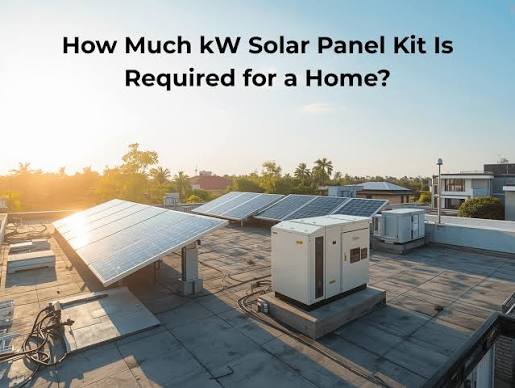
As electricity prices continue to rise, many families are exploring rooftop solar as a way to reduce monthly expenses and gain greater energy independence. One of the most popular choices for Indian homes is a 3kW rooftop solar system, which is often suitable for a typical four-member household with moderate electricity consumption.
But how much can such a system actually save? Let’s take a closer look.
Is a 3kW Solar System Suitable for Your Family?
A 3kW rooftop solar system is generally ideal for households that consume approximately 250–450 units (kWh) of electricity per month. It can comfortably support the daily energy needs of many families using:
- LED lighting
- Ceiling fans
- Refrigerators
- Televisions
- Washing machines
- Water pumps
- Laptops and mobile charging
- Moderate use of air conditioners (depending on consumption)
Your actual electricity usage will determine whether a 3kW system is the right fit.
How Much Electricity Does a 3kW System Generate?
Under favorable weather conditions, a 3kW rooftop solar system in India can generate approximately:
| Time Period | Estimated Electricity Generation* |
|---|---|
| Per Day | 12–15 units |
| Per Month | 360–450 units |
| Per Year | 4,300–5,400 units |
*Actual generation depends on your location, roof orientation, shading, weather, and system efficiency.
Estimated Monthly Savings
Suppose your household currently pays around ₹3,500–₹4,500 per month in electricity bills.
If your 3kW solar system generates most of your daytime electricity needs, your monthly savings could be substantial.
| Before Solar | After Solar (Illustrative) |
|---|---|
| Monthly Electricity Bill | ₹3,500–₹4,500 |
| Estimated Monthly Savings | ₹2,500–₹4,000 |
| Estimated Annual Savings | ₹30,000–₹48,000 |
Actual savings depend on your electricity tariff, net metering policy, energy usage pattern, and solar generation.
Government Subsidy Can Reduce Installation Costs
Eligible residential consumers may receive financial assistance under the PM Surya Ghar: Muft Bijli Yojana.
For a 3kW rooftop solar system, the central subsidy can be up to ₹78,000, subject to prevailing government guidelines and eligibility conditions.
This significantly lowers the upfront investment and improves the overall return on investment.
How Long Does It Take to Recover the Investment?
A typical 3kW system may cost around ₹1.8–₹2.4 lakh before subsidy.
After applying the available subsidy, many homeowners can recover their investment in approximately 4–6 years, depending on:
- Installation cost
- Electricity consumption
- Local tariff rates
- Solar energy generation
- Maintenance and system performance
Since most solar panels are designed to last 25 years or more, homeowners can continue benefiting from lower electricity bills long after the system has paid for itself.
Additional Benefits Beyond Savings
Installing a rooftop solar system also offers:
- Reduced dependence on grid electricity
- Protection from rising electricity tariffs
- Lower carbon emissions
- Increased property value
- Reliable long-term energy generation
- Low maintenance requirements
Tips to Maximize Your Savings
To get the best performance from your 3kW system:
- Install panels where they receive maximum sunlight.
- Avoid shading from nearby trees or buildings.
- Clean the panels regularly.
- Use energy-efficient appliances.
- Schedule periodic maintenance checks.
- Monitor system performance through the inverter or monitoring app.
Is a 3kW Solar System Worth It?
For many four-member households with moderate electricity usage, a 3kW rooftop solar system strikes a good balance between installation cost and energy generation. Combined with government subsidies and long-term savings on electricity bills, it can be a practical investment for homeowners seeking to reduce energy costs while supporting clean energy adoption.
Frequently Asked Questions (FAQs)
1. Is a 3kW solar system enough for a family of four?
Yes. A 3kW rooftop solar system is generally suitable for a family of four with moderate electricity consumption, typically between 250 and 450 units per month.
2. How many units of electricity can a 3kW solar system generate per day?
A well-installed 3kW system can generate approximately 12–15 units of electricity per day, depending on sunlight and weather conditions.
3. How much can I save on my monthly electricity bill?
Many households may save ₹2,500–₹4,000 per month, depending on their electricity usage, local tariff, and net metering regulations.
4. What is the cost of installing a 3kW solar system?
The installation cost generally ranges from ₹1.8 lakh to ₹2.4 lakh before subsidy. Prices vary based on equipment quality, location, and installer.
5. Is there a government subsidy for a 3kW solar system?
Yes. Eligible homeowners can receive a central subsidy of up to ₹78,000 under the PM Surya Ghar: Muft Bijli Yojana, subject to current government guidelines.
6. How long do solar panels last?
Most modern solar panels have a 25-year performance warranty, though they can often continue generating electricity beyond that period with reduced efficiency.
7. Do solar panels work during cloudy weather?
Yes. Solar panels continue to generate electricity on cloudy days, but output is lower compared to bright, sunny conditions.
8. Can I use appliances like ACs with a 3kW solar system?
Yes. A 3kW system can support moderate air conditioner usage along with other household appliances, provided the overall electricity demand matches the system’s capacity.
9. Does a 3kW solar system require frequent maintenance?
No. Routine cleaning and periodic inspections are usually sufficient to maintain good performance.
10. Is investing in a 3kW solar system worth it?
For many households, yes. With lower electricity bills, government subsidies, and a long system lifespan, a 3kW rooftop solar system can provide significant financial and environmental benefits over time.
Disclaimer: The figures provided in this article are illustrative estimates. Actual costs, electricity generation, savings, subsidy amounts, and payback periods vary based on location, electricity tariffs, installation quality, weather conditions, and applicable government policies. Always consult an authorized solar installer and your local DISCOM for the most accurate information.
Leave a Reply