
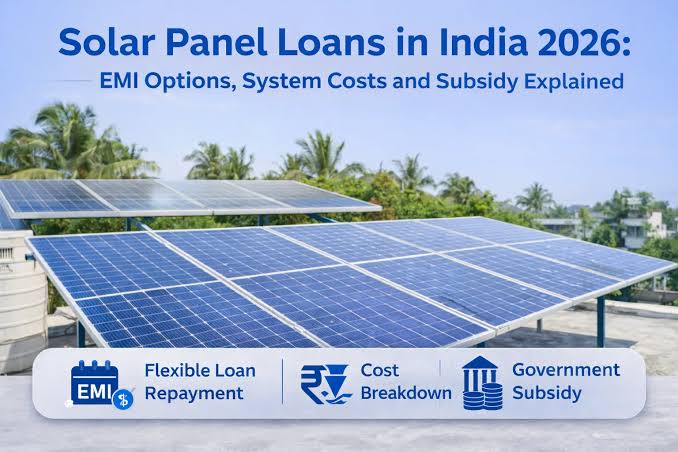
Installing a rooftop solar system is often seen as a major financial commitment. While the long-term savings are attractive, the upfront cost can discourage many homeowners from making the switch. Fortunately, solar loans and EMI (Equated Monthly Installment) options have made rooftop solar more affordable than ever.
But can you really install solar with no upfront cost? The answer depends on the financing option you choose. Here’s what every homeowner should know before signing up for a solar loan.
Why Financing Matters
The cost of a residential rooftop solar system typically ranges from ₹60,000 for a 1 kW system to ₹4 lakh or more for larger installations. Although government subsidies can reduce this cost, many families still prefer financing instead of paying the full amount upfront.
Solar loans spread the installation cost over several years, making clean energy accessible to middle-income households.
What Is a Solar Loan?
A solar loan is a financing option offered by banks, non-banking financial companies (NBFCs), and other participating lenders to help homeowners install rooftop solar systems.
Instead of paying the entire installation cost at once, you repay the loan through fixed monthly EMIs over an agreed period.
Some lenders also offer collateral-free loans for eligible residential rooftop solar projects, subject to their lending policies.
Can You Install Solar with Zero Upfront Payment?
Some lenders and installers advertise “zero upfront cost” or “no down payment” offers. However, these offers vary by lender and may include specific terms and conditions.
In many cases:
- The lender finances most or all of the installation cost.
- You begin paying EMIs after installation.
- Processing fees, documentation charges, or initial deposits may still apply.
- Eligibility depends on your credit profile and the lender’s requirements.
Always read the loan agreement carefully before proceeding.
How EMI Financing Works
Here’s a simplified example:
| Item | Example Value |
|---|---|
| Solar System Size | 3 kW |
| Installation Cost | ₹2,10,000 |
| Government Subsidy | ₹78,000 |
| Loan Amount (Example) | ₹1,32,000 |
| Loan Tenure | 5 years |
| Monthly EMI | Depends on interest rate and lender |
If your monthly electricity savings are close to or higher than your EMI, the system can help offset much of the financing cost.
Benefits of Solar Loans
Choosing a solar loan offers several advantages:
- Lower initial financial burden
- Immediate reduction in electricity bills
- Opportunity to preserve savings for other expenses
- Flexible repayment tenures
- Easier access to rooftop solar for middle-income families
Things to Compare Before Taking a Loan
Not all financing options are the same. Compare:
- Interest rate
- Processing fees
- Loan tenure
- Prepayment or foreclosure charges
- EMI amount
- Eligibility criteria
- Documentation requirements
A lower interest rate may significantly reduce the total cost over the loan period.
Government Support
Under the PM Surya Ghar: Muft Bijli Yojana, eligible homeowners can receive a central subsidy for residential rooftop solar installations. This reduces the amount that may need to be financed and can lower monthly EMIs.
Some financial institutions also participate in government-supported rooftop solar financing initiatives. Availability may vary by lender and region.
Are Solar Loans Worth It?
For many households, yes.
If your monthly electricity bill is substantial, financing a rooftop solar system may allow you to begin saving on electricity immediately while paying manageable monthly EMIs. Once the loan is repaid, you continue benefiting from reduced electricity costs for many years.
However, it is important to evaluate the total loan cost, including interest, rather than focusing only on the monthly EMI.
Tips Before You Apply
- Compare offers from multiple lenders.
- Choose an experienced and authorized solar installer.
- Confirm subsidy eligibility before installation.
- Read all loan terms carefully.
- Understand the total repayment amount, not just the EMI.
- Ensure the system size matches your household’s electricity consumption.
Conclusion
Solar loans have made rooftop solar more accessible by reducing the need for large upfront payments. While “zero upfront cost” offers can be attractive, they are not always completely free of initial expenses. Understanding the loan terms, comparing lenders, and factoring in government subsidies can help you make an informed decision. For many homeowners, financing a rooftop solar system is a practical way to reduce electricity bills and invest in clean energy without placing excessive strain on household finances.
Frequently Asked Questions (FAQs)
1. Can I install rooftop solar without paying any money upfront?
Some lenders and installers offer financing that may cover most or all of the installation cost. However, some plans may still include processing fees, documentation charges, or other initial costs. Always review the loan agreement carefully.
2. Who can apply for a solar loan?
Eligibility varies by lender but generally includes homeowners with a residential property, a valid electricity connection, and a satisfactory credit profile.
3. Does the PM Surya Ghar subsidy reduce my loan amount?
Yes. If you’re eligible, the central subsidy can reduce the overall installation cost, which may lower the amount you need to borrow.
4. How long can I repay a solar loan?
Repayment tenures vary by lender and can range from a few years to longer periods, depending on the financing plan offered.
5. Will my electricity bill become zero after installing solar?
Not necessarily. Your bill depends on your electricity consumption, the size and performance of your solar system, net metering rules, and local electricity tariffs.
6. Can I prepay my solar loan?
Many lenders allow prepayment, but some may charge foreclosure or prepayment fees. Check the loan terms before signing the agreement.
7. Is a solar loan better than paying cash?
It depends on your financial situation. Paying cash avoids interest costs, while a loan helps spread the expense over time and preserves your savings for other needs.
8. What documents are usually required for a solar loan?
Commonly required documents include identity proof, address proof, income proof, bank statements, property details, and electricity bill copies. Requirements vary by lender.
9. Are solar loans available across India?
Many public sector banks, private banks, and NBFCs offer rooftop solar financing, though availability and terms may differ by state and lender.
10. Is financing a solar system a good investment?
For many homeowners, yes. If the monthly electricity savings help offset the EMI and the system is well designed, rooftop solar can provide long-term financial and environmental benefits.
Leave a Reply