
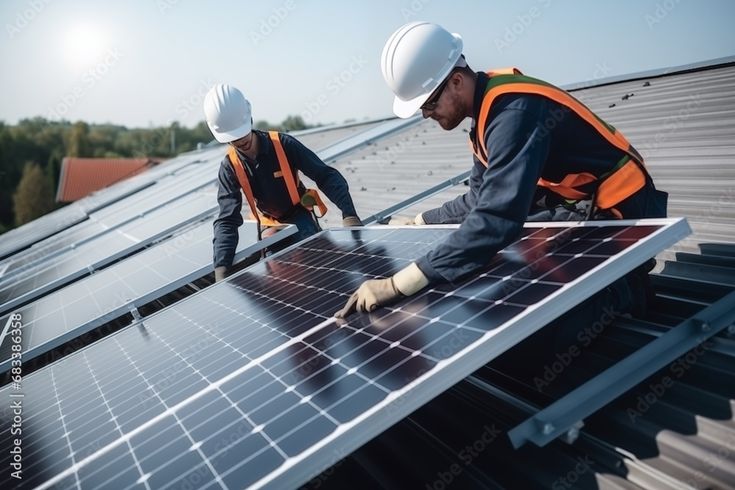
For many middle-class families, deciding what to do with their savings is an important financial choice. Two popular options are investing in a Fixed Deposit (FD) or installing a rooftop solar system. While a Fixed Deposit offers predictable returns with relatively low risk, rooftop solar can generate long-term savings by reducing electricity bills.
So, which option provides better value? The answer depends on your financial goals, electricity consumption, and investment horizon. Let’s compare both options.
Understanding the Two Investments
Fixed Deposit (FD)
A Fixed Deposit is a savings instrument offered by banks and financial institutions where you invest a lump sum for a fixed period and earn interest at a predetermined rate.
Typical benefits include:
- Predictable returns
- Low investment risk
- Flexible investment tenure
- Easy access through banks
However, the returns may be affected by inflation and taxes, reducing the real value of your earnings over time.
Rooftop Solar System
A rooftop solar system generates electricity for your home, reducing your dependence on grid power and lowering monthly electricity bills.
Benefits include:
- Long-term savings on electricity
- Government subsidy for eligible households
- Protection from rising electricity tariffs
- Low maintenance costs
- Environmental benefits through clean energy generation
Instead of earning interest, your “return” comes from avoided electricity expenses.
Cost Comparison
Suppose you have ₹2 lakh available for investment.
Option 1: Fixed Deposit
Assume you invest ₹2 lakh in a Fixed Deposit.
Your final return will depend on:
- Interest rate offered by the bank
- Investment tenure
- Taxation on interest income
- Inflation during the investment period
Since interest rates and tax liabilities vary, your actual earnings will differ.
Option 2: Rooftop Solar
Suppose the same amount is used to install a residential rooftop solar system.
With government subsidy (if eligible), your effective investment may be lower than the total installation cost.
The system then begins generating electricity every day, helping reduce monthly electricity bills for many years.
Comparing Long-Term Value
| Factor | Fixed Deposit | Rooftop Solar |
|---|---|---|
| Initial Investment | Yes | Yes |
| Government Financial Support | No | Available for eligible households |
| Monthly Income/Savings | Interest income | Reduced electricity bills |
| Protection Against Rising Electricity Prices | No | Yes |
| Typical Asset Life | Investment tenure | 25+ years for solar panels |
| Environmental Benefit | No | Yes |
| Ongoing Maintenance | None | Minimal |
Which Option Generates Better Financial Value?
For households with high or moderate electricity bills, rooftop solar may generate substantial cumulative savings over its lifespan.
Many residential systems recover their installation cost within 4–6 years, after which the electricity generated continues to reduce household expenses for many additional years.
By contrast, a Fixed Deposit provides fixed interest income but does not reduce your recurring electricity expenses.
Consider the Risks
Fixed Deposit Risks
- Returns may not keep pace with inflation.
- Interest income may be taxable depending on applicable tax laws.
- Higher future electricity bills remain an ongoing household expense.
Rooftop Solar Considerations
- Requires suitable roof space.
- Performance depends on sunlight, system quality, and maintenance.
- Savings depend on household electricity consumption and local tariff rates.
- Initial installation requires planning and proper vendor selection.
When a Fixed Deposit May Be Better
A Fixed Deposit may suit you if:
- You need guaranteed returns.
- You may require access to your money within a defined period.
- Your electricity consumption is very low.
- Your roof is unsuitable for solar installation.
- You prefer a low-maintenance financial investment.
When Rooftop Solar May Be Better
Rooftop solar may be a better choice if:
- Your monthly electricity bill is significant.
- You plan to stay in your home for many years.
- Your roof receives good sunlight.
- You qualify for government subsidy.
- You want to reduce long-term household expenses while supporting clean energy.
Can You Choose Both?
Yes.
Many financial planners recommend maintaining an emergency fund and essential savings in secure financial instruments while investing in assets that reduce recurring expenses.
If your financial situation allows, combining a Fixed Deposit for liquidity with rooftop solar for long-term savings may provide a balanced approach.
Conclusion
There is no one-size-fits-all answer. A Fixed Deposit offers predictable returns and liquidity, while rooftop solar provides long-term savings by reducing electricity bills and helping protect against future tariff increases. For homeowners with moderate to high electricity consumption and suitable roof space, rooftop solar can be a valuable long-term investment. Before making a decision, consider your financial goals, energy needs, subsidy eligibility, and the total costs and benefits of each option.
Frequently Asked Questions (FAQs)
1. Is rooftop solar more profitable than a Fixed Deposit?
It depends on your electricity usage, installation cost, subsidy eligibility, and the interest rate available on Fixed Deposits. Rooftop solar generates savings by reducing electricity bills, while a Fixed Deposit earns interest on your investment.
2. How long does a rooftop solar system last?
Most solar panels are designed to operate for 25 years or more, although their electricity generation may gradually decline over time.
3. Does rooftop solar provide guaranteed returns?
No. Savings depend on electricity generation, local weather conditions, household consumption, electricity tariffs, and system performance.
4. Can government subsidies improve solar returns?
Yes. Eligible residential consumers can receive financial assistance under the PM Surya Ghar: Muft Bijli Yojana, reducing the initial investment and potentially improving overall returns.
5. What happens if electricity prices increase?
Higher electricity tariffs generally increase the value of the electricity generated by your rooftop solar system, potentially leading to greater savings.
6. Is rooftop solar a low-maintenance investment?
Yes. Solar systems typically require periodic cleaning and occasional inspections, but maintenance costs are generally low compared to many other home improvements.
7. Can I install solar if I already have a home loan?
Yes. Having a home loan does not automatically prevent you from installing rooftop solar, although financing eligibility depends on your lender and financial profile.
8. Which is safer: Fixed Deposit or rooftop solar?
A Fixed Deposit is generally considered a low-risk financial investment. Rooftop solar is a physical asset whose financial benefits depend on electricity generation and household usage rather than guaranteed interest.
9. Can rooftop solar increase my property’s value?
Energy-efficient features, including rooftop solar, may improve a property’s attractiveness to buyers, although the impact varies by market.
10. Should I consult a financial advisor before investing?
Yes. If you’re unsure whether a Fixed Deposit or rooftop solar is better for your situation, consider consulting both a qualified financial advisor and an authorized solar installer to make an informed decision.
Disclaimer: This article is for general informational purposes only and should not be considered financial or investment advice. Fixed Deposit returns, tax treatment, solar installation costs, electricity savings, subsidy amounts, and government policies may change over time. Consult your bank, a financial advisor, an authorized solar installer, and your local DISCOM before making any investment decision.
Leave a Reply