
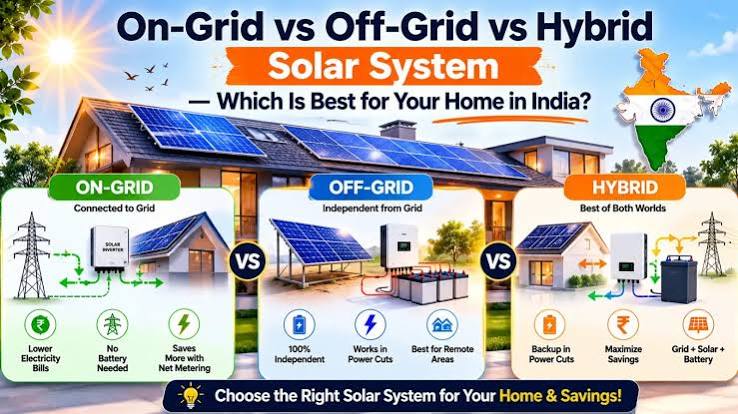
Choosing a rooftop solar system isn’t just about buying solar panels. One of the biggest decisions you’ll make is whether to install an on-grid solar system or a hybrid solar system.
Both can reduce your electricity bills, but they are designed for different needs. If you pick the wrong one, you could end up spending more money than necessary. This guide explains the differences in simple terms so you can decide which option offers the best value for your family’s budget.
What Is an On-Grid Solar System?
An on-grid solar system is connected directly to your local electricity grid.
During the day, your solar panels generate electricity to power your home. If your panels produce more electricity than you need, the extra power can be exported to the grid through a net meter, subject to your state’s regulations.
At night or on cloudy days, your home simply uses electricity from the grid.
Best for:
- Homes with reliable electricity supply
- Families wanting to reduce monthly electricity bills
- Homeowners looking for the lowest installation cost
What Is a Hybrid Solar System?
A hybrid solar system combines solar panels with battery storage.
During the day, your solar panels power your home and charge the battery. When the sun goes down or there’s a power cut, your home can use the electricity stored in the battery.
This provides backup power without relying entirely on the electricity grid.
Best for:
- Areas with frequent power cuts
- Families needing backup for essential appliances
- Homeowners who want greater energy independence
On-Grid vs. Hybrid: Quick Comparison
| Feature | On-Grid Solar | Hybrid Solar |
|---|---|---|
| Connected to Grid | Yes | Yes |
| Battery Required | No | Yes |
| Works During Power Cuts | No (for safety reasons) | Yes (selected circuits) |
| Installation Cost | Lower | Higher |
| Maintenance | Low | Moderate |
| Monthly Electricity Savings | High | High |
| Backup Power | No | Yes |
How Much Does Each System Cost?
The biggest difference between the two systems is the battery.
Batteries add a significant cost to the installation.
Approximate Cost in India
| System Size | On-Grid System | Hybrid System |
|---|---|---|
| 2 kW | ₹1.2–₹1.6 lakh | ₹2–₹3 lakh |
| 3 kW | ₹1.8–₹2.4 lakh | ₹3–₹4.5 lakh |
| 5 kW | ₹3–₹4 lakh | ₹4.5–₹7 lakh |
Prices vary based on equipment quality, battery capacity, location, and installer.
Which System Saves More Money?
If your goal is reducing electricity bills, an on-grid system usually offers the faster return on investment.
Why?
- Lower installation cost
- No expensive battery replacement
- Lower maintenance expenses
- Government subsidy available for eligible residential systems under applicable guidelines
For many urban families with reliable electricity, the savings from an on-grid system often outweigh the additional cost of batteries.
When Does a Hybrid System Make Sense?
A hybrid system is worth considering if your family experiences frequent power outages.
Imagine this situation:
- Your children are attending online classes.
- You’re working from home.
- The refrigerator must keep running.
- Medical equipment needs uninterrupted power.
In these cases, the battery provides valuable backup that may justify the higher investment.
Understanding Battery Costs
Batteries are the most expensive part of a hybrid system.
Depending on the battery technology and usage, replacement may be required after several years.
Before choosing a hybrid system, ask your installer about:
- Battery warranty
- Expected lifespan
- Replacement cost
- Maintenance requirements
Understanding these costs helps you estimate the true long-term investment.
Monthly Savings Example
Suppose your family currently pays ₹4,000 per month in electricity bills.
| Item | On-Grid | Hybrid |
|---|---|---|
| Monthly Electricity Bill Before Solar | ₹4,000 | ₹4,000 |
| Estimated Monthly Savings* | ₹3,200 | ₹3,200 |
| Backup During Power Cuts | No | Yes |
*Savings vary depending on electricity usage, solar generation, local tariffs, and net metering policies.
Both systems can reduce electricity bills significantly. The main difference is that a hybrid system also provides backup power.
Maintenance Comparison
| Maintenance Item | On-Grid | Hybrid |
|---|---|---|
| Solar Panel Cleaning | Every 2–3 months | Every 2–3 months |
| Inverter Inspection | Annual | Annual |
| Battery Maintenance | Not Required | Required |
| Estimated Annual Maintenance Cost | ₹1,000–₹3,000 | ₹2,000–₹6,000 |
Hybrid systems generally cost more to maintain because batteries require periodic checks and eventual replacement.
Which System Is Better for a Middle-Class Family?
Choose an On-Grid System if You:
- Have reliable electricity in your area.
- Want the quickest return on investment.
- Want to maximize electricity bill savings.
- Prefer lower maintenance costs.
- Have a limited installation budget.
For many middle-class households, this is the most economical option.
Choose a Hybrid System if You:
- Experience frequent power cuts.
- Need backup for essential appliances.
- Work from home regularly.
- Run a home business.
- Want greater energy independence.
The higher upfront cost may be worthwhile if uninterrupted power is important for your family’s daily life.
Questions to Ask Before You Decide
Before signing a contract, ask your installer:
- How many hours of backup will the battery provide?
- What is the battery warranty?
- Can the system be upgraded later?
- What maintenance will be required?
- Is the system eligible for applicable government incentives?
- What are the estimated annual savings?
Clear answers will help you compare quotations more effectively.
Which Option Offers Better Value?
For most Indian families living in areas with dependable electricity, an on-grid solar system provides the strongest financial return. It costs less to install, requires less maintenance, and can significantly reduce monthly electricity bills.
A hybrid system becomes more attractive when uninterrupted power is a priority. While the higher installation and battery costs mean a longer payback period, the added convenience of backup electricity can make it worthwhile for households that experience regular outages.
The best choice depends on your family’s electricity usage, local power reliability, budget, and long-term priorities.
Frequently Asked Questions (FAQs)
1. Which solar system is cheaper: on-grid or hybrid?
An on-grid solar system is generally more affordable because it does not require battery storage, making both installation and maintenance costs lower.
2. Can an on-grid solar system work during a power cut?
No. For safety reasons, most on-grid systems automatically shut down during a grid outage unless they include approved backup functionality.
3. Is a hybrid solar system worth the extra cost?
It can be if your area experiences frequent power cuts or your family needs reliable backup power for essential appliances. If your electricity supply is stable, an on-grid system often offers better financial value.
4. Which system has a faster return on investment?
In many cases, on-grid systems have a shorter payback period because they cost less upfront and do not involve battery replacement expenses.
Disclaimer: The costs, savings, maintenance expenses, and payback periods mentioned in this article are approximate estimates for residential rooftop solar systems in India. Actual figures vary depending on your location, electricity consumption, equipment quality, installer pricing, battery specifications, government policies, and local DISCOM regulations. Consult an authorized solar installer before making a purchase decision.
Leave a Reply